History

Share
Published 10:30 24 Feb 2022 GMT
 Via the journal Meteorites and Planetary Science[/caption]
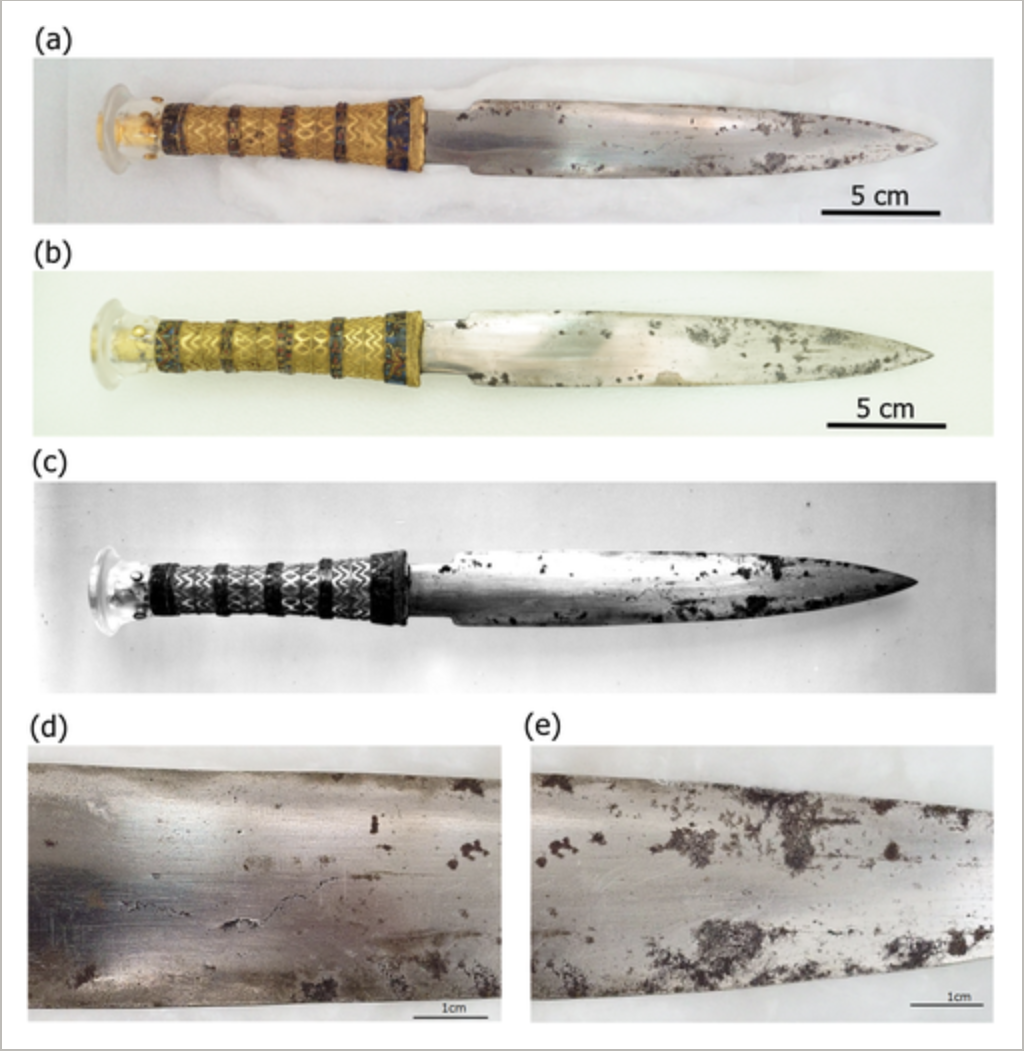
Among King Tut's impressive 5,000 piece collection, 19 objects were made from iron, which is considered bizarre as iron is not usually associated with that era in history. Archaeologists believe the use of iron indicates high status and the dagger's high nickel content suggests that the iron is made from a meteorite.
Back in 2016, scientists used X-ray fluorescence spectroscopy to analyse the dagger's composition. As expected, the dagger was mostly iron with 11 per cent nickel and 0.6 per cent cobalt - but still, scientists were stumped on how the dagger was created.
Having the materials is one thing but understanding how to manipulate them is specialised knowledge - not really common knowledge at the time - with no evidence that Egypt used iron smelting until the sixth century BCE, some 400 years after the dagger was created.
Via the journal Meteorites and Planetary Science[/caption]
Among King Tut's impressive 5,000 piece collection, 19 objects were made from iron, which is considered bizarre as iron is not usually associated with that era in history. Archaeologists believe the use of iron indicates high status and the dagger's high nickel content suggests that the iron is made from a meteorite.
Back in 2016, scientists used X-ray fluorescence spectroscopy to analyse the dagger's composition. As expected, the dagger was mostly iron with 11 per cent nickel and 0.6 per cent cobalt - but still, scientists were stumped on how the dagger was created.
Having the materials is one thing but understanding how to manipulate them is specialised knowledge - not really common knowledge at the time - with no evidence that Egypt used iron smelting until the sixth century BCE, some 400 years after the dagger was created.
 Naturally, many would point to otherworldly visitors - but it turns out there might be another, rather mundane explanation.
Turns out there were a number of methods employed at the time, including cold working, which involves cutting and polishing and low-temperature heating. In diplomatic letters written in Akkadian from the Egyptian royal archives known as the Amarna letters, a list of gifts is mentioned. The King of Mitanni sent the gifts to Tut's father, Amenhotep III, upon Amenhotep marrying his daughter.
Among the gifts was an iron dagger.
Using an X-ray fluorescence instrument in 2020, Takafumi Matsui and his colleagues at the Chiba Institute of Technology in Japan hoped to delve deeper into the dagger's history. As expected, the researchers identified elements like iron, nickel, and cobalt. They also found trace amounts of manganese and blackened spots on the blade itself that registered sulfur, chlorine, calcium and zinc.
[caption id="attachment_319124" align="alignnone" width="794"]
Naturally, many would point to otherworldly visitors - but it turns out there might be another, rather mundane explanation.
Turns out there were a number of methods employed at the time, including cold working, which involves cutting and polishing and low-temperature heating. In diplomatic letters written in Akkadian from the Egyptian royal archives known as the Amarna letters, a list of gifts is mentioned. The King of Mitanni sent the gifts to Tut's father, Amenhotep III, upon Amenhotep marrying his daughter.
Among the gifts was an iron dagger.
Using an X-ray fluorescence instrument in 2020, Takafumi Matsui and his colleagues at the Chiba Institute of Technology in Japan hoped to delve deeper into the dagger's history. As expected, the researchers identified elements like iron, nickel, and cobalt. They also found trace amounts of manganese and blackened spots on the blade itself that registered sulfur, chlorine, calcium and zinc.
[caption id="attachment_319124" align="alignnone" width="794"]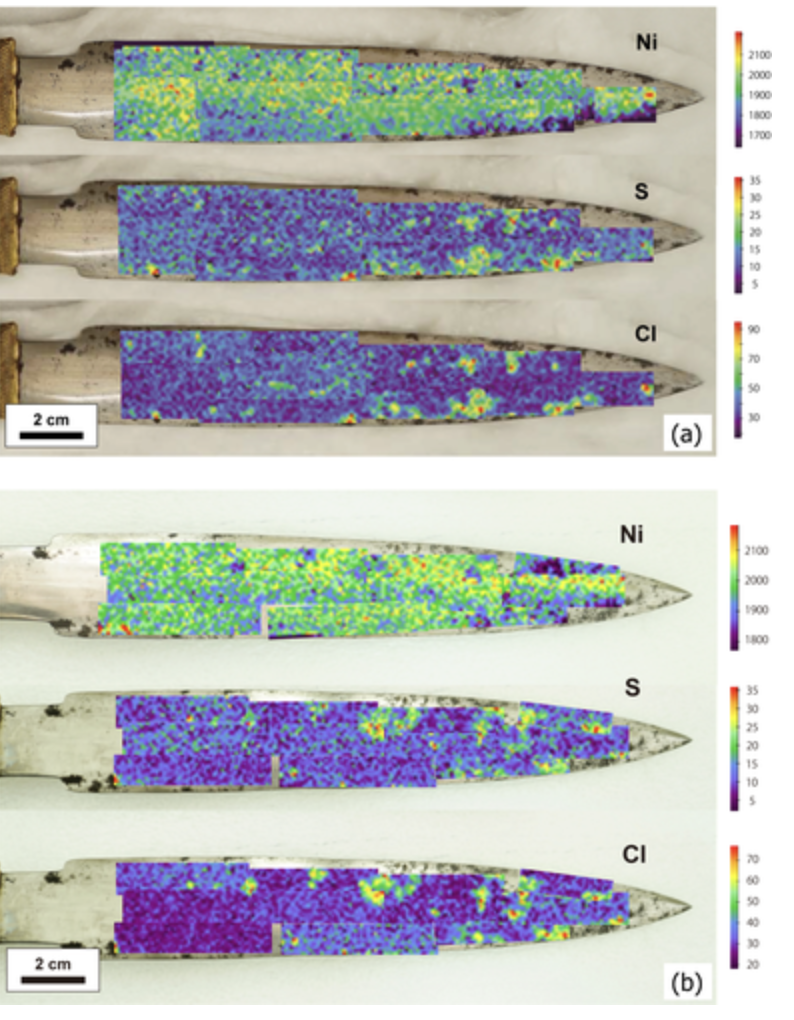 The dagger was analyzed with portable XRF spectroscopy/Via the journal Meteorites and Planetary Science[/caption]
Most interestingly, the distribution of elements appeared in a cross-hatched texture known as a "Widmanstätten pattern."
Essentially, these patterns are typical of an octahedrite, the largest group of iron meteorites. The authors further theorised that Tut's dagger was forged at a low heat of less than 950° C (1,724° F), which is indicated by the low amount of sulfur present.
Related links:
The dagger was analyzed with portable XRF spectroscopy/Via the journal Meteorites and Planetary Science[/caption]
Most interestingly, the distribution of elements appeared in a cross-hatched texture known as a "Widmanstätten pattern."
Essentially, these patterns are typical of an octahedrite, the largest group of iron meteorites. The authors further theorised that Tut's dagger was forged at a low heat of less than 950° C (1,724° F), which is indicated by the low amount of sulfur present.
Related links:

The world could end in 25 years, says Oxford scientist
Climate Change

History

History

History

History
Finland’s Air Force to stop using Swastika on its flag to avoid ‘awkwardness with allies’
The ancient symbol was hijacked by Nazi Germany The Finnish Air Force is set to remove the swastika from its flag after joining NATO two years ago. Infamously adopted by Adolf Hitler’s Nazi Party in 1920 (and still appropriated to this day by neo-Nazis), the 15,000-year-old symbol is associated with Hinduism and Buddhism outside the […]
History
9 months ago
The world could end in 25 years, says Oxford scientist
Happy Sunday! Humankind has just a quarter of a century left before we’re all wiped out, apparently. 13 years since those doomy days of 2012, which saw the Mayan calendar misinterpreted by what seemed like half of the world’s population who convinced themselves that natural disasters would extinguish all life on our planet, Oxford University […]
History
10 months ago
History
Archaeologists are too afraid to open up the tomb of China’s first Emperor
History