


Lifestyle

Share
Published 18:01 20 May 2021 BST
Explore more on these topics:
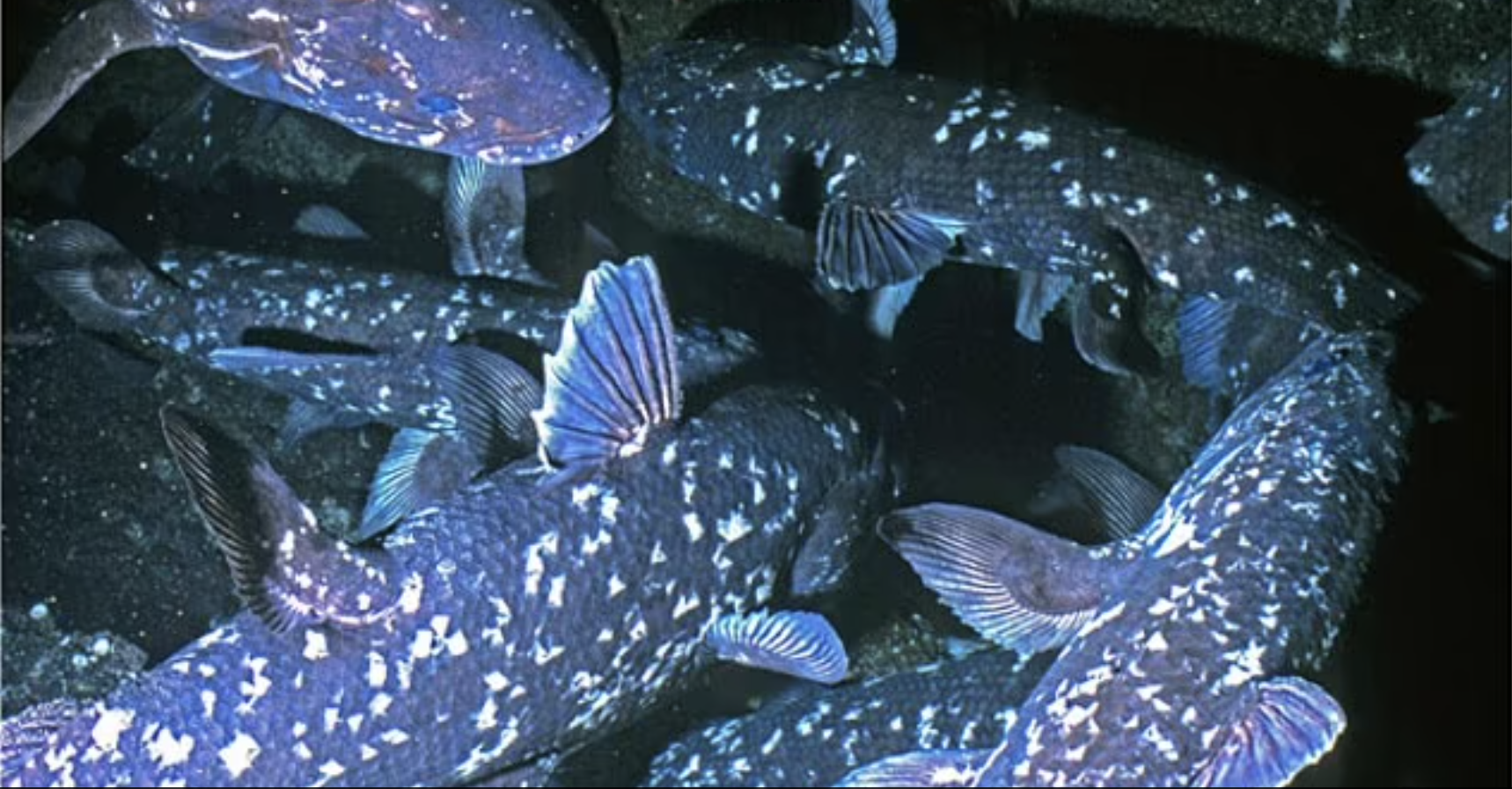 First reported in Mongabay News, it was noted that the "[d]emand for shark fins and oil has led fishers in southwestern Madagascar to set gill-nets in deeper waters. They are finding — and possibly harming — previously unknown populations of these West Indian Ocean coelacanths", among other species.
Gillnets are considered inhumane and illegal in several countries because they are essentially a type of deep sea 'net fishing', which means that, when used, they descend to significant depths and trap other creatures, often endangered, in the process; this was precisely the case in this instance, even if it did leave to an incredible scientific discovery.
The coelacanth became colloquially known as 'Old Fourlegs' among the scientific community due to its four large fins that act like limbs; they have eight fins in total: two dorsal fins, two pectoral fins, two pelvic, one anal and one caudal fin. They were most commonly found in rocky underwater areas in the Comoros archipelago.
This ancient species can weigh up to 200 pounds, reach nearly seven feet in length and live for around 50 years, not to mention swim at depths of up approximately 1,600ft (300m). Their bony structure and tough scales have previously been described as "adaptable armour". Basically, they're absolute units - impressive stuff.
First reported in Mongabay News, it was noted that the "[d]emand for shark fins and oil has led fishers in southwestern Madagascar to set gill-nets in deeper waters. They are finding — and possibly harming — previously unknown populations of these West Indian Ocean coelacanths", among other species.
Gillnets are considered inhumane and illegal in several countries because they are essentially a type of deep sea 'net fishing', which means that, when used, they descend to significant depths and trap other creatures, often endangered, in the process; this was precisely the case in this instance, even if it did leave to an incredible scientific discovery.
The coelacanth became colloquially known as 'Old Fourlegs' among the scientific community due to its four large fins that act like limbs; they have eight fins in total: two dorsal fins, two pectoral fins, two pelvic, one anal and one caudal fin. They were most commonly found in rocky underwater areas in the Comoros archipelago.
This ancient species can weigh up to 200 pounds, reach nearly seven feet in length and live for around 50 years, not to mention swim at depths of up approximately 1,600ft (300m). Their bony structure and tough scales have previously been described as "adaptable armour". Basically, they're absolute units - impressive stuff.
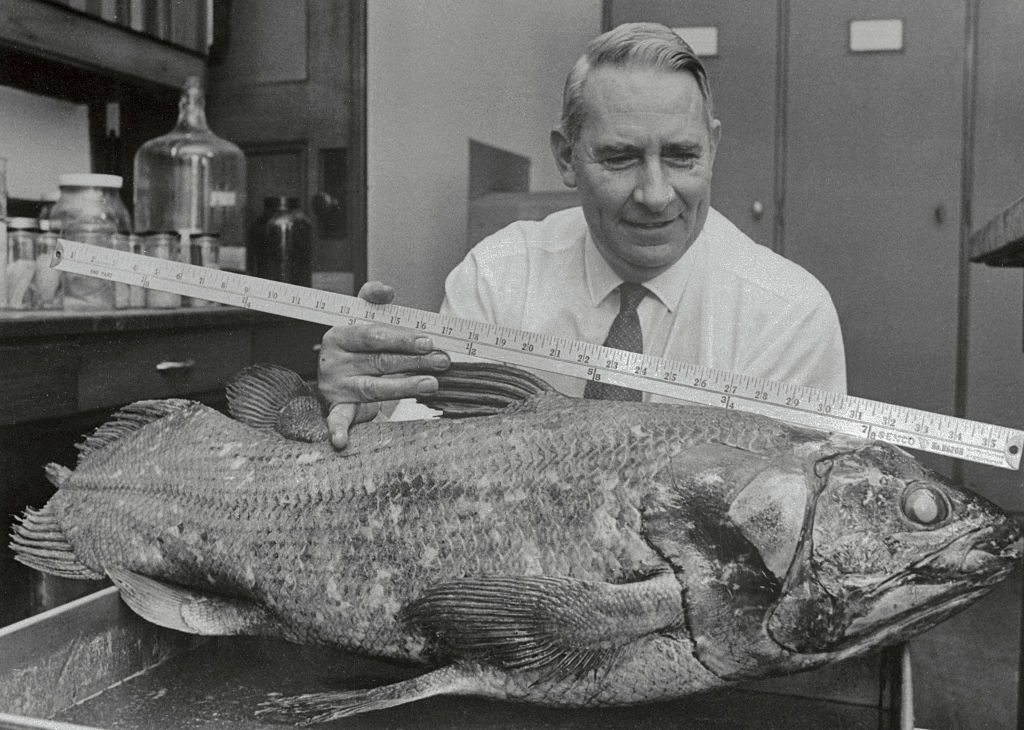 However, it turns out that although the last widely-reported sighting was said to be in 1938 - at which time it was thought to have been extinct for at least 70 million years - there have apparently been numerous unofficial sightings over the past few decades
As per a study in the South African Journal of Science, it is possible that more than 100 coelacanths could have been caught off the coast of Madagascar alone in recent decades.
The study's lead author and RESOLVE sarl Managing Director, Andrew Cooke, stated that, "When we looked into this further, we were astounded [by the numbers caught]", despite there having been "no proactive process in Madagascar to monitor or conserve coelacanths".
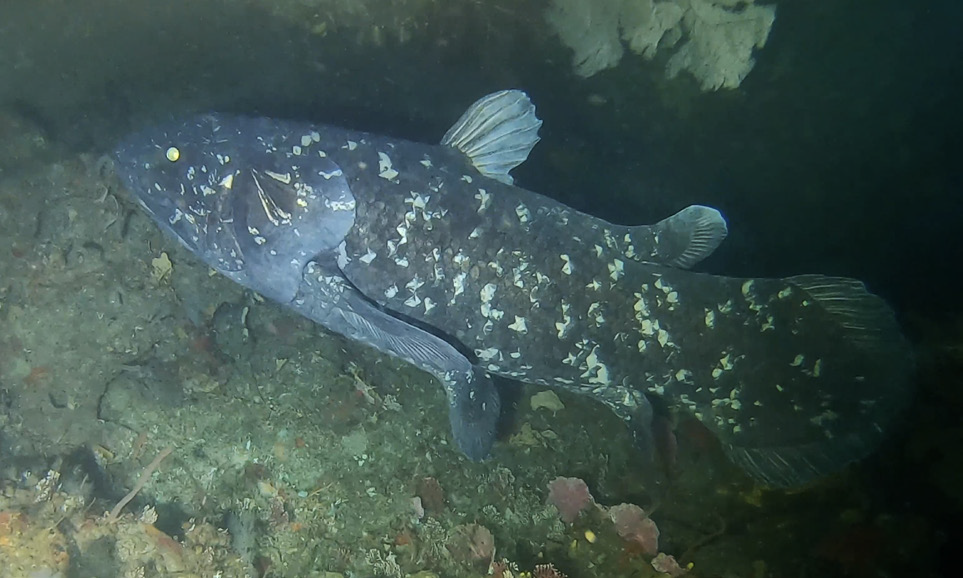 In fact, Scientific American published a piece back in 2012 which tried to blow up the myth surrounding their extinction/'living fossil' status, reiterating that like so many creatures, coelacanths had simply evolved, which is why German Marine Biologists, Hans Fricke, was apparently able to capture images of them in the 1980s.
Nevertheless, while the 420 million-year-old fossils designated, 'Latimeria chalumnae', may still be kicking it, they are still listed under the Endangered Species Act.
In fact, Scientific American published a piece back in 2012 which tried to blow up the myth surrounding their extinction/'living fossil' status, reiterating that like so many creatures, coelacanths had simply evolved, which is why German Marine Biologists, Hans Fricke, was apparently able to capture images of them in the 1980s.
Nevertheless, while the 420 million-year-old fossils designated, 'Latimeria chalumnae', may still be kicking it, they are still listed under the Endangered Species Act.
The world could end in 25 years, says Oxford scientist
Climate Change

Lifestyle

Lifestyle

Lifestyle

‘People called us stupid over 40-year mortgage – now we plan to retire in our 50s’
“There were quite a lot of offensive comments telling me I was ‘stupid’ or ‘why don’t you understand this” A young couple who took out a 40-year term mortgage still plan to retire in their fifties. Bryony Clarke, 27, purchased her three-bed semi-detached house in December 2023 for £247,500 with partner Charlie, 27. They put […]
Lifestyle
6 days ago
Taylor Swift’s favourite kebab shop has become one of London’s top tourist attractions
Margot Robbie’s favourite Clapham nightclub is also pulling in tourists, according to new research. If you thought London tourists were still only interested in Buckingham Palace and Big Ben, think again. One of the capital’s biggest tourist attractions right now is apparently a kebab shop beloved by Taylor Swift. Kentish Delight in Kentish Town has […]
Lifestyle
1 week ago
Lifestyle
Lifestyle


